$24 million in federal funding
RE-MOVE: Using neuromodulation to give back movement and independence to people with paralysis

John has lived with a spinal cord injury for over 30 years after a car accident at age 16. He has been a quadriplegic ever since and has spent his life coping with the daily challenges of his paralysis. Beyond the obvious physical limitations, his day-to-day is shaped by all sorts of invisible suffering: muscle spasms, intense neuropathic pain, and constant vigilance over the health risks of his condition. A few years ago, however, an appointment with Christian Iorio-Morin changed his outlook on his condition and gave him a spark of hope. With John's help and an interdisciplinary team of 13 other co-investigators, Christian Iorio-Morin, a neurosurgeon and a professor and researcher in the FMSS Department of Surgery and at the Centre de recherche du CHUS (CRCHUS) , launched RE-MOVE, an innovative project to restore movement in people like John who are living with paralysis.
While these injuries generally lead to irreversible deficits, the spinal-cord neural circuits responsible for muscle control often remain intact. This means we may be able to restore movement by using neuromodulation solutions to bypass the injury.
Christian Iorio-Morin, Neurosurgeon and Professor and Researcher, FMSS
Neuromodulation technologies like the ones Christian Iorio-Morin and his team want to develop use human-machine interfaces to detect movement intention and activate paralyzed muscles. However, current devices are only effective for a minority of patients. RE-MOVE aims to overcome these limitations with an innovative neuromodulation system that restores natural functional muscle control in a greater number of people with paralysis.
RE-MOVE is a vision that Christian Iorio-Morin and I have had for many years. My specialty in neurophysiological mechanisms and his expertise in functional neurosurgery combined with the contributions of many other people have let us create a project with exceptional potential. We believe that restoring not only movement but also the sensation of movement will be a game changer for people living with paralysis.
Alain Frigon, Professor and Researcher, Department of Pharmacology-Physiology
RE-MOVE aims to restore this type of muscle control with cortical sensors, haptic gloves, and EMG sensors to detect movement intention and create an analogous and simultaneous stimulation. This real-time technology interface could let John and other people with paralysis regain the independence that once seemed lost.
This project is a real chance to improve the living conditions of people living with one or more paralyzed limbs. By combining promising technologies that make neuromodulation truly accessible, RE-MOVE could transform the lives of many people who need it by letting them move in a controlled way.
Christian Iorio-Morin, Neurosurgeon and Professor and Researcher, FMSS

Photo : Mathieu Lanthier - UdeS
This project received major funding of $24 million from the Government of Canada in one of the largest grants in UdeS history. The project also draws from close collaborations with the CIUSSS de l’Estrie – CHUS, Université de Montréal, Université Laval, University of Melbourne, University of Alberta, and Polytechnique Montréal. Other project partners include Moelle épinière et motricité Québec (MÉMO-Qc), the Heart and Stroke Foundation of Canada, and the Praxis Spinal Cord Institute.
An interdisciplinary project to help people with paralysis
To tackle the project's technical, ethical and human challenges, RE-MOVE has an interdisciplinary team of experts from diverse backgrounds that include neuroscience, engineering, law, and ethics. According to John, this collaborative model is one of the project's greatest strengths.
A unique feature of RE-MOVE is its "ethics-by-design" approach, in which ethical, technical and regulatory issues are considered from the start to ensure that every advance respects the rights and well-being of the people using the technology.
Paralysis is a relatively simple problem: brain commands that produce movement can no longer get to the muscles, as the injury keeps the message from getting through. While in theory a neuromodulation system can bypass this injury, the concept is still very difficult to apply in practice, as you need new devices, new software, new signal processing algorithms, and new neurophysiological knowledge all at once. All of these developments raise ethical and regulatory issues that make human studies extremely complex. As doing everything sequentially would take decades, we are instead tackling the work simultaneously. This means that any applicable ethical or regulatory issues directly shape how the technology is developed.
Christian Iorio-Morin, Neurosurgeon and Professor and Researcher, FMSS
Personal stories and impacts: A key aspect that drives innovation
John's story is a poignant testimonial about the true meaning behind technologies like those being developed for the RE-MOVE project. The experiential knowledge that he and other people in his situation provide is very important, as it directly shapes technological development.
RE-MOVE's strength comes from Christina Iorio-Morin's leadership and vast expertise. His team includes experts from across Canada. The project goes beyond technology to include ethics and the voices of people like me who are living with spinal cord injuries to ensure the technology truly meets our needs.
John, a person with quadriplegia and a contributor to the research project
The RE-MOVE interdisciplinary team
The success of RE-MOVE stems from diverse and experienced people who each contribute their specific expertise to move the project forward. The key people on the team include:
Neuroscience: Alain Frigon, Professor, Faculty of Medicine and Health Sciences
Alain Frigon, a Professor and Researcher in the Department of Pharmacology-Physiology at the FMSS, is playing a central role in RE-MOVE project as head of basic research. A recognized specialist in the sensorimotor circuits of the spinal cord, Alain Frigon works closely with engineers and clinicians on approaches to restore movement and the sensation of movement (i.e. proprioception) after someone has sustained a complete or incomplete spinal lesion. His role is to design and refine innovative neuromodulation methods for initial testing on preclinical models before they are transposed to humans.
This project involves close collaboration between experts from complementary disciplines, and this interdisciplinary approach is what will let us advance neuromodulation research in Canada.
Alain Frigon, Professor and Researcher, Department of Pharmacology-Physiology
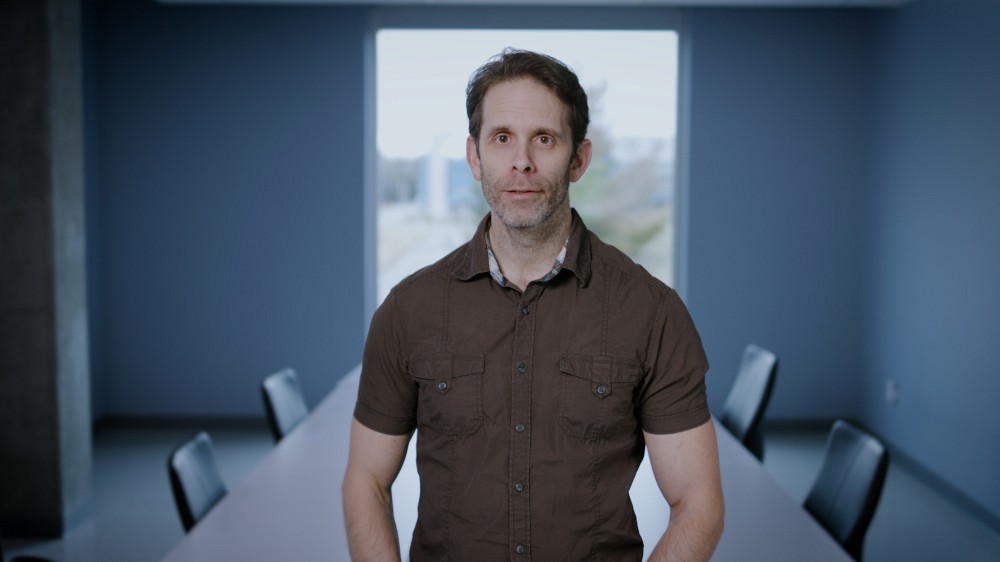
Photo : Mathieu Lanthier - UdeS
Haptic gloves and engineering: François Michaud, Professor, Faculty of Engineering
François Michaud, a professor in the Department of Electrical and Computer Engineering in the Faculty of Engineering, has a key role in the RE-MOVE project, as he oversees not only the development of the integration software but also the design of the haptic gloves used for neurostimulation. He uses his expertise in robotics and the skills of his team to meet the complex technological challenges of systems integration. His goal is to ensure that the project’s different technological components work in a coordinated and efficient way. He uses the OpenTera open-source software platform developed by an interdisciplinary team from the Université de Sherbrooke’s INTER Strategic Cluster. This system will be enhanced with neuromodulation modules, applications and services tailored to the project’s specific needs. This approach will speed up the efficient, collaborative and sustainable development and deployment of RE-MOVE technologies with the idea of going beyond the strict framework of research to optimize the prototype and its integration.
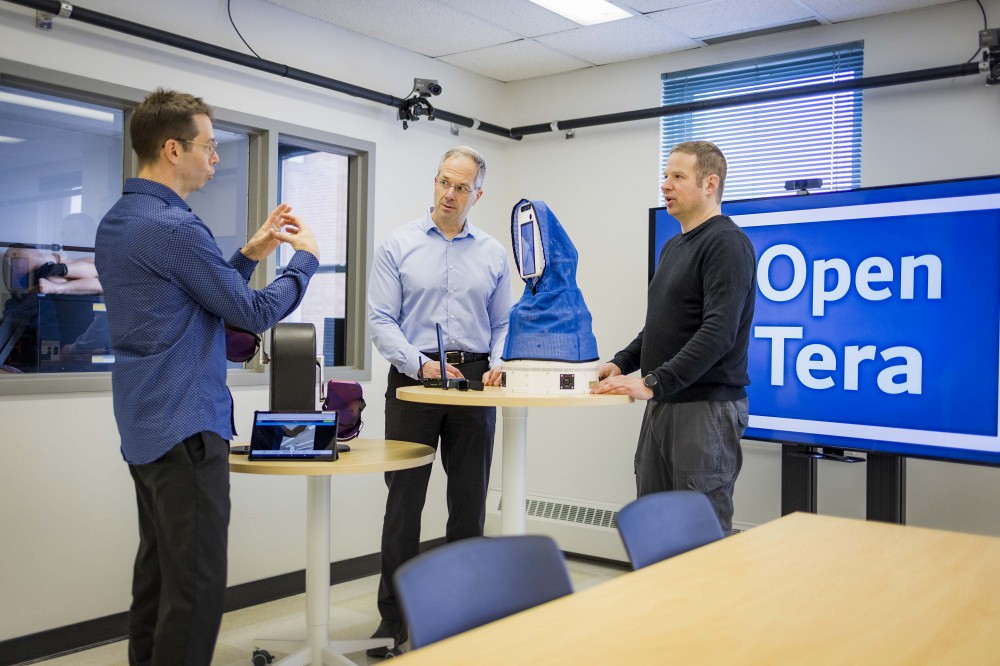
Photo : Mathieu Lanthier - UdeS
Normative framework: Charles-Étienne Daniel, Professor, Faculty of Law and Faculty of Engineering
Charles-Étienne Daniel, a professor in the Faculty of Law and Faculty of Engineering, provides essential expertise on the normative and ethical aspects of emerging technologies. With his team, he is performing an in-depth analysis of the project's normative framework to address issues such as the responsibility of stakeholders, data regulation, the protection of basic rights, and research policies. He is also working closely with Allison Marchildon to develop guidelines and tools to help the project members reflect on these ethical issues. Having a foot in both disciplines ensures that legal matters are considered at the earliest stages rather than as a final validation. This compels the team to constantly reflect on ethical issues throughout the project.
RE-MOVE is a very stimulating opportunity to study issues at the crossroads between law, ethics, and cutting-edge technologies. This includes the challenges of integrating artificial devices into the human body.
Charles-Étienne Daniel, Professor, Faculty of Law and Faculty of Engineering
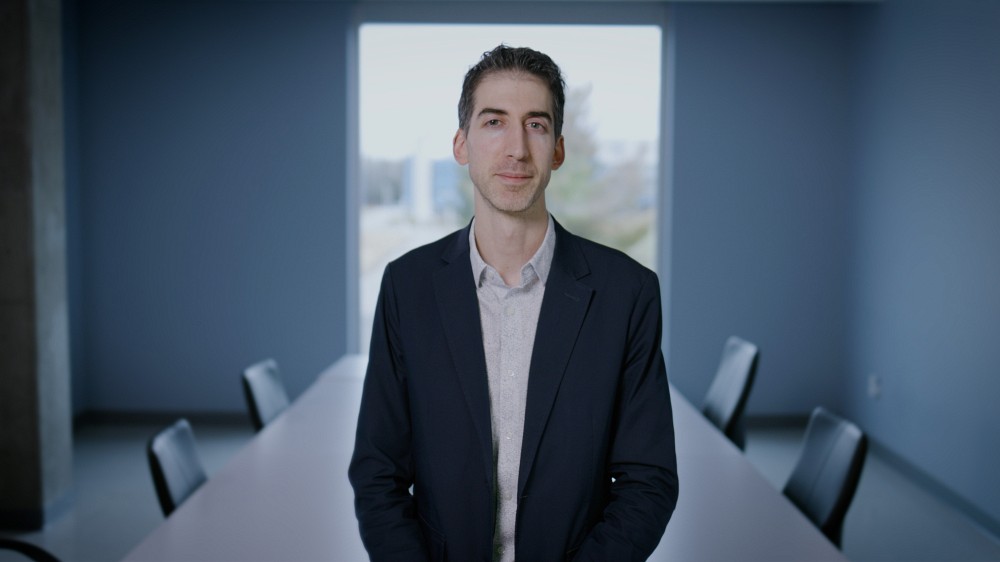
Photo : Mathieu Lanthier - UdeS
Ethics: Allison Marchildon, Professor, Faculty of Arts and Humanities
Allison Marchildon is the ethical advisor lending her expertise to the entire RE-MOVE project from start to finish. With her team and Charles-Étienne Daniel, she supports the researchers through every step, from ideation to experimentation. She ensures that ethics are considered at every stage of the technological development so that the team can anticipate risks upstream and adjust choices up until the time of actual use. She does not dictate solutions but rather encourages everyone to critically and collaboratively reflect on human, social and moral issues. The aim is to create ethical technology "by design" by getting research teams and the people likely to use the technology actively involved in the process. She also facilitates constant dialogue between all stakeholders to guide responsible decisions that are appropriate for the contexts of use.
A successful ethical approach is one that makes ethics a driving force instead of an afterthought. Ethics should influence concrete decisions about a project and, if necessary, transform the technology itself. This is exactly what we are doing with RE-MOVE, as ethics considerations are included from start to finish in a real and engaged way.
Allison Marchildon, Professor, Department of Philosophy and Applied Ethics, Faculty of Arts and Humanities
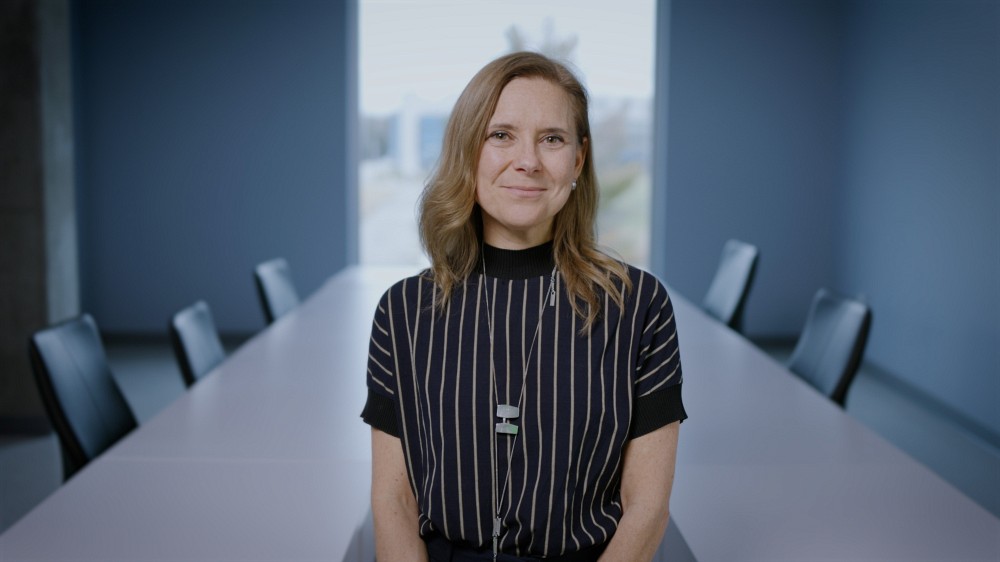
Photo : Mathieu Lanthier - UdeS
Clinical demonstration, Christian Iorio-Morin
RE-MOVE is generating great excitement in the hospital sector because of its collaborative approach and potential to improve people’s quality of life. One of the project’s main challenges surrounds surgery on human subjects, as the procedures require specialized equipment and cutting-edge operating rooms. This is why collaboration with the CIUSSS de l'Estrie – CHUS is so important.
As Dr. André Carpentier, Scientific Director of the CRCHUS, explained, “RE-MOVE is a great example of our community’s university mission and its impact. Here, we bring together people from different areas in a spirit of innovation, collaboration and hope. We let experts combine their knowledge and action around the shared, human-focused goal of improving people’s well-being.”
Since experimental surgery is very rare in Quebec, this surgical collaboration for RE-MOVE is creating new frontiers in the province’s traditional research-hospital partnerships. This major contribution from the hospital sector will greatly foster and facilitate surgical research in the future to go well beyond the project’s already ambitious advances.
People's futures transformed by neuromodulation
RE-MOVE represents genuine hope for John and millions of other people around the world paralyzed by spinal cord injury, stroke, or multiple sclerosis. Indeed, the technology from this interdisciplinary project could transform their lives by allowing them to control movement again, an ability that seemed lost forever for so many. For John, every advance in the RE-MOVE project is another step toward a future technology that improves not only his quality of life but also his true sense of independence.
About Christian Iorio-Morin
- Professor and Researcher, Department of Surgery, FMSS
- Neurosurgeon and Professor and Researcher, Centre de recherche du CHUS (CRCHUS)
About the RE-MOVE interdisciplinary team
Alain Frigon, Professor and Researcher, Department of Pharmacology-Physiology
François Michaud, Professor, Faculty of Engineering
Charles-Étienne Daniel, Professor, Faculty of Law and Faculty of Engineering
Allison Marchildon, Professor, Faculty of Arts and Humanities