Research internships for international students
UdeS partner internship program
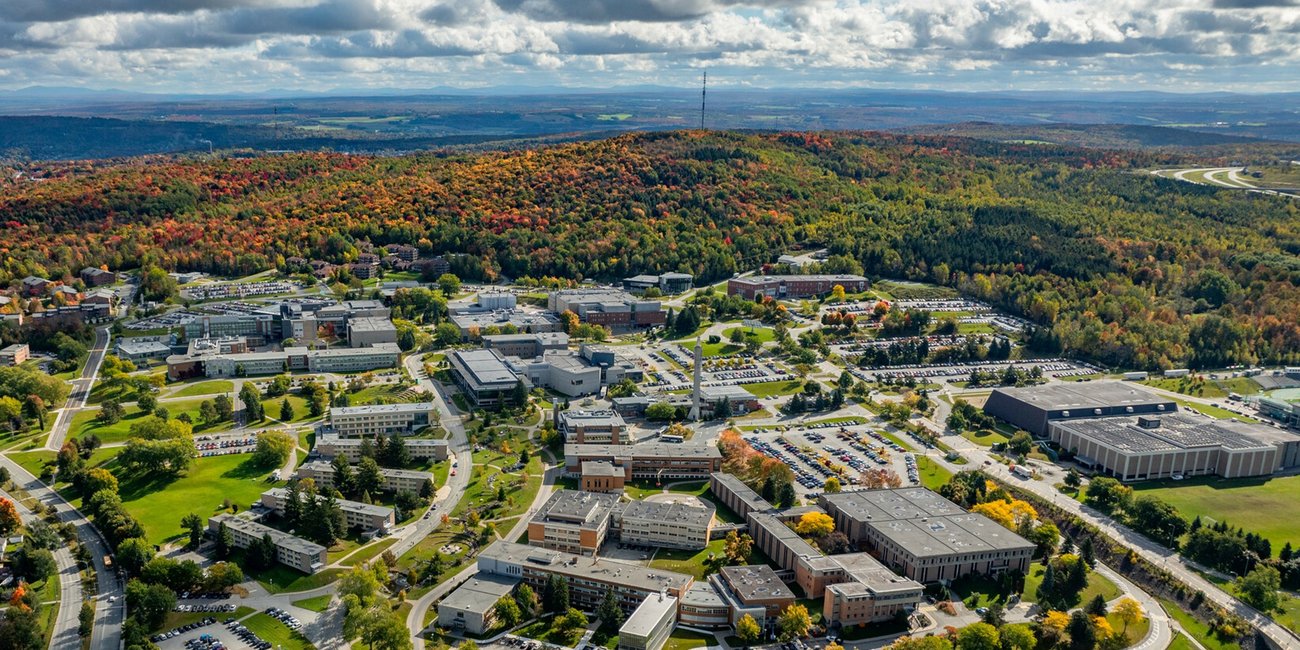
The UdeS partner internship program enables international students from established UdeS partner institutions to carry out 3 to 6 months internships with one of our research teams.
Eligibility
- Any student in a master's program (M1 or M2) or in the 2nd or 3rd year of an engineering school who needs to complete an internship of 3 months or more as part of their studies.
- A GPA equivalent at 12/20 or higher.
- Only students from a partner institution of the Université de Sherbrooke are eligible.
- Check the internship offer for specific eligibility requirements.
- A research community of over 6,500 people
- Over 100 research excellence grants awarded each year
- 6 niches of excellence promoting interdisciplinary research
- 19 research centers
- 105 research chairs, including 2 Canada Excellence Research Chairs
- 2 CNRS international research laboratories, LN2 and Frontières quantiques
- 1 CNRS International Research Centre
- 6 research institutes
- An institutional network of research platforms offering highly specialized shared services and equipment
- An unrivalled training environment for the next generation of scientists
- A support structure for technology transfer
Research internships available
Internships offered to students from UdeS partner institutions for 2026.
In order to maximize your chances of finding an internship that matches your profile, we encourage you to browse all of the categories available. Some offers may be suitable for several fields of study and may not appear in the section you are exploring first.
Electrical engineering and computer science
- 2027-003_Dominique_DROUIN | Optimization of microfabrication processes for micro pillars for heterogeneous integration
- 2027-004_Dominique_DROUIN | Design and Fabrication of Ferroelectric Memcapacitors for Cryogenic Electronics
- 2027-005_Dominique_DROUIN |New Metallurgical Techniques for Low-Temperature Hybrid Bonding in Advanced Microelectronic Assembly
- 2027-006_Dominique_DROUIN | Development of an Innovative UV Laser Delamination Process for Advanced Microelectronic Packaging
- 2027-007_Kian_JAFARI | Development of MEMS biosensors for the early and personalized diagnosis of chronic diseases
- 2027-008_Serge_ECOFFEY | Bio-based polymers for the microfabrication and assembly of microelectronic systems
- 2027-009_Serge_ECOFFEY | Microfabrication and Integration of Quantum Photonic Systems
- 2027-010_Fabien_ALIBART | Demonstration of Audio Signal Classification Using a Spiking Neural Network Implemented on an FPGA
- 2027-024_Fabien_ALIBART | Implementation of Spiking Neural Networks (SNNs) on FPGA Circuits
- 2027-028_Mathieu_Juan | Quantum hybrid systems
- 2027-029_Max Hofheinz | Reading of superconducting qubits using Josephson photonics
- 2027-030_Yili_(Kelly)_TANG | Transportation networks and travel behaviour research
- 2027-031_Yili_(Kelly)_TANG | Autonomous robotics and navigation algorithms for autonomous driving
- 2027-032_Yili_(Kelly)_TANG | Quantum computing and applications to transportation networks
- 2027-034_Mathieu_MASSICOTTE | Development of Quantum Magnetometers Based on 2D Materials
- 2027-035_Dominique Drouin | Development of a molding process for the heterogeneous integration of large electronic chips
Mechanical Engineering
- 2027-036_Olivier_ROBIN | Data Collection by Bicycle for Air and Noise Pollution
- 2027-037_Olivier_ROBIN | Vibrating screens for particle sorting
- 2027-038_Olivier_ROBIN |Technologies for Reducing Noise and Vibration Levels in Passenger and Vehicle Transport Vessels
Robotic engineering
- 2027-001_Louis_PETIT | Intelligent Robotics for Mapping Complex Environments
- 2027-015_Wael_SULEIMAN | Adaptive Loco-Manipulation on a Unitree Go2
Civil engineering
- 2027-013_Sébastien_Langlois | Modeling Driver Speed Variations Over Several Consecutive Spans
- 2027-018_William_WILSON| Research internship in alternative clinkers, low-carbon cements and sustainable concrete
- 2027-027_Patrick_AYOTTE | Prevention of fugitive dust emissions from mine tailings disposal sites and bulk cargo transshipment sites
- 2027-030_Yili_(Kelly)_TANG | Transportation networks and travel behaviour research
- 2027-031_Yili_(Kelly)_TANG | Autonomous robotics and navigation algorithms for autonomous driving
Chemical engineering
- 2027-023_Jean-Fracois_BOULANGER | Development of Processes for the Recovery of Asbestos-Containing Mine Tailings in Quebec
- 2027-035_Dominique Drouin | Development of a molding process for the heterogeneous integration of large electronic chips
Physics Engineering
Biology
- 2027-014_Pascale_BEAUREGARD |Colonization of roots by Bacillus subtilis within a synthetic community
Chemistry
Computer Science
Quantum Computing
Geomatics
Mathematics
- 2027-030_Yili_(Kelly)_TANG | Transportation networks and travel behaviour research
- 2027-032_Yili_(Kelly)_TANG | Quantum computing and applications to transportation networks
Physics
- 2027-027_Patrick_AYOTTE | Prevention of fugitive dust emissions from mine tailings disposal sites and bulk cargo transshipment sites
- 2027-028_Mathieu_Juan | Quantum hybrid systems
- 2027-029_Max Hofheinz | Reading of superconducting qubits using Josephson photonics
- 2027-032_Yili_(Kelly)_TANG | Quantum computing and applications to transportation networks
- 2027-034_Mathieu_MASSICOTTE | Development of Quantum Magnetometers Based on 2D Materials
- 2027-035_Dominique Drouin | Development of a molding process for the heterogeneous integration of large electronic chips
- NEW : 2027-039_Benjamin_BROCK| Experimental Quantum Error Correction Using Superconducting Circuits
- NEW : 2027-040_Juanita_BOCQUEL | Colored centers in diamond: quantum control and detection
- 2027-002_Simon_LABBÉ | Development of Strategies to Combat Cryptococcus neoformans
- 2027-011_Alexis_MARCOTTE-CHÉNARD | Optimizing Metabolic Health Through Exercise and Intermittent Fasting
- 2027-012_Sylvie_BEAUDOIN | A Study of Moderating Factors in the “Active Body, High-Performance Brain” Approach in a School Setting
- 2027-019_Catherine_PERRON| Setting Research Priorities for Palliative and End-of-Life Care in Quebec: A Provincial Public Consultation
- 2027-025_Ayman_OWEIDA | Radiation Therapy and the Immune Microenvironment in Lung Cancer: Mechanisms of Resistance and New Therapeutic Targets
- 2027-020_Angélique_LAURENT | Practice of Philosophical Dialogue in Preschool Education
- 2027-021_Otlilia_HOLGADO | From Training to the Workplace: Developing Professional Skills
- 2027-022_Otlilia_HOLGADO |Analysis of the Skills Expected Upon Entering the Field After Earning a DEP: A Study of Employer Expectations
- 2027-026_Florian_MEYER | How Educational Advisors Are Shaping Curriculum Development in the Digital Age
How to apply ?
- Select the internship offers that interest you (maximum 3 offers)
- Prepare the required documents (one application per internship offer, files in pdf format):
- Covering letter
- Curriculum vitae
- Transcripts: all available transcripts from higher education (after the baccalauréat)
- One or two letters of reference if possible
- Fill in the application form
- Send the required documents to Udes.Francophonie@usherbrooke.ca, indicating the internship offer reference number and title in the subject of the email.
- Deadline for submitting your documents: As soon as possible (deadline: October 31, 2026)
- Students from UdeS partner institutions consult the internship offers and can apply for one or more of them.
- Applications are reviewed and, in some cases, preliminary interviews may be held.
- Applications that meet the eligibility and quality criteria (grade point average, skills related to the field, motivation) are forwarded to the professors.
- The professors review the applications, conduct interviews and make their selection.
- The results are communicated to those who applied, and the students then send their response (acceptance or rejection of the internship).
- With the support of USherbrooke International, candidates selected for an internship complete their temporary immigration application online (work permit application).
- Start dates for internships at the Université de Sherbrooke are flexible.
Do you have questions ?
For general questions about research internships, visit the USherbrooke International website.
You can write to UdeS.Francophonie@USherbrooke.ca if you have specific questions about the UdeS partner internship program.