Our projects
Taking part in the fight against cancer means choosing to change the future!
Donating to the Université de Sherbrooke Cancer Research Institute (IRCUS) is more than just money. Your gesture helps support innovative interdisciplinary research that helps reduce the impact of cancer on those affected.
When the immune system goes off track because of treatment
Dr. Hugues Allard-Chamard, M.D., Ph.D., rheumatologist, Professor and Researcher at IRCUS
![[Translate to English:] Hugues Allard-Chamard](/ircus/fileadmin/_processed_/4/8/csm_2660049411-2025_10_22_chamard_allard_hugues_ml_28958_medium_18e2fa60d3.jpg)
By studying the defective mechanisms of the immune system in individuals with CTLA4 deficiency — a protein essential for its regulation — Dr. Hugues Allard-Chamard realized that his team had just uncovered a breakthrough with major implications for oncology. The published results show that in the absence of CTLA4, B cells become activated prematurely. In other words, the mechanism that normally prevents the immune system from attacking the body’s own organs — and thus from developing an autoimmune disease — no longer functions. This discovery paves the way for developing strategies to prevent the severe autoimmune complications experienced by about 25% of patients receiving ipilimumab — an immunotherapy targeting the CTLA4 protein — to treat advanced cancers such as kidney cancer or melanoma. This breakthrough is particularly significant because these complications can be fatal, even when the treatment is stopped.
The immunotherapy that no longer wants to play hide-and-seek with cancer
Subburaj Ilangumaran, Ph.D., and Sheela Ramanathan, Ph.D., Professors and Researchers at IRCUS
![[Translate to English:] Sheela Ramahatan et Subburaj Ilangumaran](/ircus/fileadmin/_processed_/8/1/csm_2026-01-13_5_decouvertes_IRCUS_ML_34786_59d5df88fe.jpg)
The immune system acts as a guardian, detecting and eliminating cancer cells. But cancer cells have learned to hide. One of their strategies is to stop expressing a key protein called NLRC5. Normally, this protein helps cells display signals that make them visible to immune cells. Using a preclinical fibrosarcoma model, Professors Subburaj Ilangumaran and Sheela Ramanathan have shown that the loss of NLRC5 promotes cancer development and progression. Their discovery highlights the importance of this protein in immune surveillance and opens a promising avenue for research: restoring NLRC5 to force cancers to become visible again. The team is currently developing innovative NLRC5‑based immunotherapies.
Destroying metastases without damaging the brain through targeted radiosurgery
Dr. David Mathieu, M.D., neurosurgeon oncologist, Professor and Researcher at IRCUS
![[Translate to English:] David Mathieu](/ircus/fileadmin/_processed_/5/8/csm_2026-01-14_5_Dr_Mathieu_IRCUS_ML_34997_4cfe61da46.jpg)
Brain metastases arising from bladder cancer and gynecologic cancers present a major challenge. Not only are they difficult to treat, but their frequency is increasing, because affected patients are now surviving longer than before, giving the disease more time to spread to the brain. Two large‑scale international studies, led by Dr. David Mathieu in collaboration with 10 hospital centers across 5 countries participating in the International Radiosurgery Research Foundation (IRRF), evaluated the effectiveness of stereotactic radiosurgery (SRS). This high‑precision technique, performed using a Gamma Knife, focuses high‑energy beams on the tumor without damaging the rest of the brain. The results are remarkable: up to nearly 90% of treated brain metastases from bladder and gynecological cancers were locally controlled, with fewer than 5% adverse effects. SRS thus emerges as a safe, effective, and well‑tolerated approach for patients, offering a new targeted therapeutic option.
Gynecologic cancer: an innovative treatment, yet not easily accessible
Mélanie Morin, Ph.D., Professor and Researcher at IRCUS, in collaboration with Dr. Paul Bessette, M.D., and Dr. Dr. Korine Lapointe-Milot, M.D., gynecologic oncologists, Professors and Researchers at IRCUS
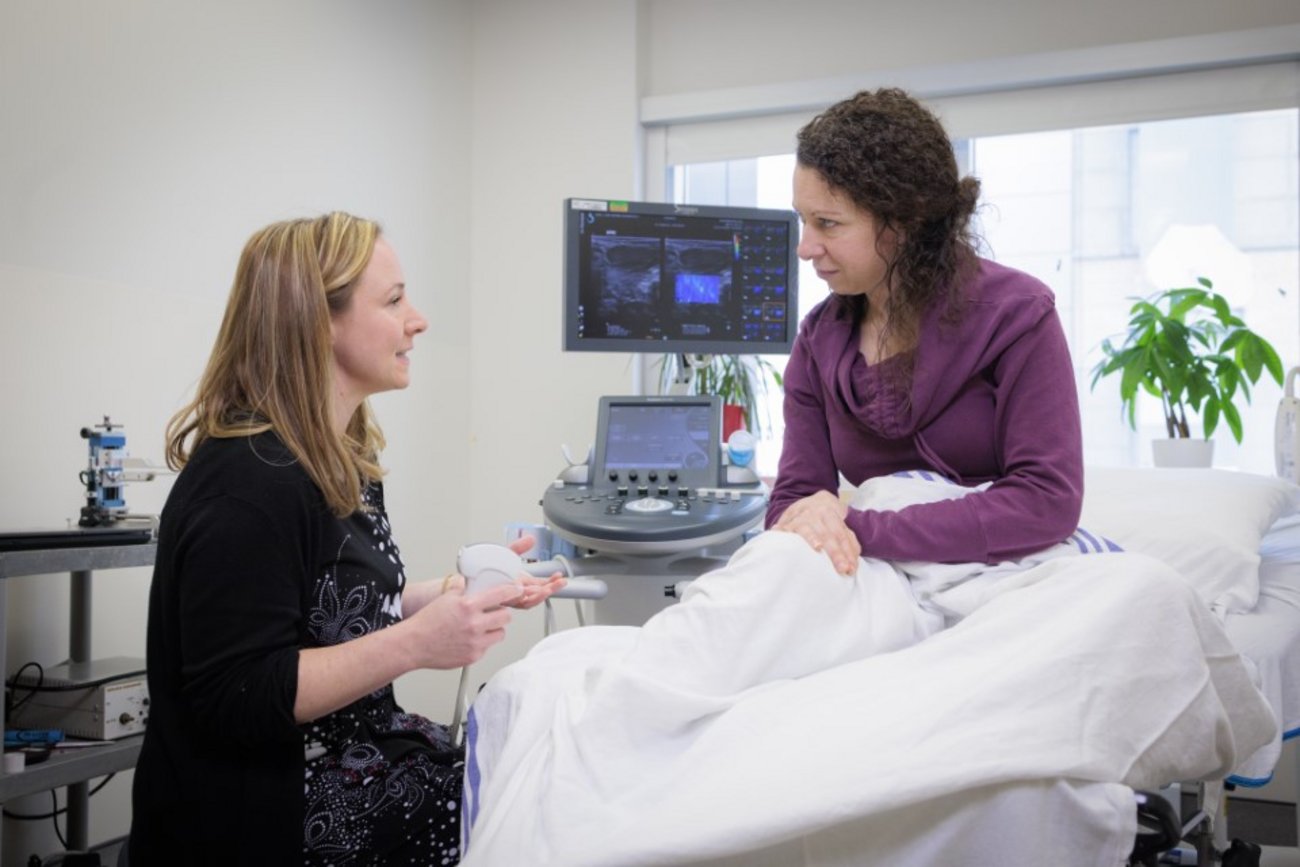
Every year, over 8,000 Canadian women survive an endometrial or cervical gynecologic cancer. Among these survivors, close to 70% experience dyspareunia, a pain felt during sexual intercourse. A major breakthrough developed at IRCUS may offer a long-term solution for women who have been suffering from this condition for years. This innovative approach relies on a multimodal pelvic floor physiotherapy treatment whose benefits have been validated through a series of studies conducted by an interdisciplinary team led by Professor Mélanie Morin. Seven scientific articles support the integration of this treatment into the follow‑up care offered to gynecologic cancer survivors. If the Sherbrooke treatment were better known and more accessible, it could transform the lives of thousands of women living with dyspareunia, even many years after completing their cancer treatments.
Medicinal chemistry tackles an “orphan” therapeutic target to treat aggressive cancers
Richard Leduc, Ph.D., and Pierre-Luc Boudreault, Ph.D., Professors and Researchers at IRCUS
![[Translate to English:] Richard Leduc et Pierre-Luc Boudreault](/ircus/fileadmin/_processed_/e/5/csm_20220325_Leduc_Boudreault_ML_0731-2_a6362fa369.jpg)
Until now lacking a specific inhibitor, the protein TMPRSS13 — implicated in the progression of several aggressive cancers — was considered an “orphan” therapeutic target. The team led by Professors Richard Leduc and Pierre‑Luc Boudreault developed a collection of 65 innovative medicinal‑chemistry molecules to tackle it. Among these, the compound N‑0430 proved particularly effective, capable of inhibiting TMPRSS13 at extremely low doses. This breakthrough positions N‑0430 as a promising candidate for the development of targeted treatments. It paves the way for a new generation of therapies capable of slowing tumor growth by neutralizing a long‑overlooked enzyme. This work offers tangible hope for more precise and effective treatments against hard‑to‑treat cancers such as triple‑negative breast cancer and advanced colorectal cancer.
By outsmarting time, a team improves access to an innovative treatment against metastatic prostate cancer
Brigitte Guérin, Ph.D., Professor and Researcher at IRCUS
![[Translate to English:] Brigitte Guérin](/ircus/fileadmin/_processed_/a/f/csm_2025-2-14_cyclotron_guerin_ML_2883_010ce4e3f4.jpg)
In 2018, a major study assembled 40 researchers from various fields throughout the province of Quebec, with an audacious mission: improve the imaging and the treatment of treatment-resistant metastatic prostate cancer. Under the direction of Brigitte Guérin, Professor and Researcher at IRCUS, this research project has just concluded, exceeding not only expectations but also giving hope to hundreds of patients.
Revolutionize cancer treatments with virus engineering
Taha Azad, PhD, Professor and Researcher at IRCUS
![[Translate to English:] Pr Taha Azad et son étudiante](/ircus/fileadmin/_processed_/d/e/csm_2024-10-18_AZAD_taha_laboratoire_ML_4713_1__2d4fe266a5.jpg)
His research allowed a major breakthrough in virus engineering that promises to revolutionize oncolytic immunotherapy. The strategy that was developed enhances the transformation of oncolytic viruses into "mobile pharmacies", able to override the resistance to treatments. Moreover, Ass. Prof. Taha Azad currently develops vaccines against aggressive brain cancer in children, specifically high-grade gliomas.
Genetic scissors to thwart pediatric cancers
Alexandre Maréchal, PhD, Professor and Researcher at IRCUS, in collaboration with Raymund Wellinger, PhD, and Pierre-Étienne Jacques, PhD, Assistant Professors at IRCUS
![[Translate to English:] Image représentant des pipettes en laboratoire](/ircus/fileadmin/_processed_/1/9/csm_pipette_2_f2e8ae622b.jpg)
Prof. Marechal’s team conducted a study to accelerate the development of innovative treatments against hard-to-treat cancers, which are often pediatric cancers, such as sarcomas and osteosarcomas. These cancers use 'alternative lengthening of telomeres' (ALT), a mechanism that enables the cells to multiply indefinitely. Using a huge public database harnessing the genetic scissors technology known as CRISPR technology (Cancer Dependency Map), the team identified several genes that are critical for the survival of ALT cancer cells. What draws the team’s attention: the SUB1 protein, involved in telomere stability, has been identified as a very promising target to exploit.
A simple urine test to detect bladder cancer
François-Michel Boisvert, PhD, IRCUS Scientific Director, in collaboration with Dr. Claudio Jeldres, MD, urologist-oncologist, Professor and Researcher at IRCUS
![[Translate to English:] Claudio Jeldres, M.D., urologue-oncologue, professeur-chercheur à l'IRCUS](/ircus/fileadmin/_processed_/7/b/csm_CANCER_VESSIE_1_5efae8bb8d.jpg)
The two specialists have pooled their expertise for this remarkable breakthrough to develop a quick and easily available test that can detect a bladder cancer in the urine. In particular, this test could detect a recurrence without the need to perform several cystoscopies each year. This invasive procedure, performed by a urologist, requires introducing a tube with a camera and a light source in the urethra.
Cycling between two chemotherapy sessions to knock out cancer
Eléonor Riesco, PhD, Professor and Researcher at IRCUS in collaboration with Dr. Michel Pavic, oncologist, Director of medical research in oncology at IRCUS
![[Translate to English:] Pre Eléonor Riesco, Ph. D., professeure-chercheuse à l’IRCUS et à la Faculté des sciences de l’activité physique](/ircus/fileadmin/_processed_/0/c/csm_RIESCO_2_64316fac87.jpg)
The research team tried to understand how the immune system responds to aerobic exercise in an innovating clinical study conducted with metastatic cancer patients receiving chemotherapy. This raises a great interest as it discovered that the immune response triggered by this type of exercise would have what is needed to help fight cancer.
A promising injectable therapy for several metastatic cancers
Étienne Rousseau, MD, nuclear medicine specialist, Assistant Professor at IRCUS, in collaboration with Brigitte Guérin, PhD, Assistant Professor at IRCUS
![[Translate to English:] Patient qui effectue un scan médical](/ircus/fileadmin/_processed_/b/c/csm_TURCOTTE_2_7acefe5746.jpg)
A very promising nuclear imaging clinical study showed that more than 12% of individuals with metastatic cancer of the upper digestive system (esophagus, stomach, biliary tracts, and pancreas) could receive a treatment with an innovative injectable precision radiotherapy (177Lu-PSMA) currently available in Quebec for prostate cancer. This major breakthrough was made possible thanks to the pooling of our two specialists' expertise in nuclear medicine and radiochemistry, respectively.
A crystal ball to choose the best therapy against aggressive brain cancers.
Claire Dubois, PhD, Professor and Researcher at IRCUS, in collaboration with David Fortin, MD, neurosurgeon and neuro-oncologist, Professor and Researcher at IRCUS
![[Translate to English:] Personnel de recherche effectuant une manoeuvre en laboratoire](/ircus/fileadmin/_processed_/7/0/csm_20220325_ANTIVIRAL_n385_ML_0679_1767556cc7.jpg)
Developing a tool to guide oncologists when selecting the best chemotherapy treatment for patients with an aggressive brain cancer: this is what the two specialists have achieved by sharing their know-how. This innovative tool consists in growing tumour fragments of each patient on egg membrane in the laboratory and then testing several treatments in order to select the most effective one.
Taking part in the fight against cancer is choosing to change the future!
Donating to the Université de Sherbrooke Cancer Research Institute (IRCUS) goes more and beyond a number. Your gesture helps to support innovating multidisciplinary research that helps mitigate the impact of cancer for those affected.
The inauguration of the Phase 1 Oncology Unit to offer innovative treatments in Estrie
Michel Pavic, MD, oncologist, director of medical research in oncology at IRCUS
![[Translate to English:] Dr Michel Pavic et Dr Frédéric Lemay](/ircus/fileadmin/_processed_/d/9/csm_Unite_de_phase_1-2_fdd4b18cce.png)
IRCUS was proud to announce the implementation of the first Phase 1 Oncology Unit in Estrie; this initiative was led by Dr. Michel Pavic, director of medical research in oncology at IRCUS alongside Dr. Frédéric Lemay, both Professors and Researchers at IRCUS. The Unit they co-manage is a source of hope for persons with an advanced cancer who have exhausted all the available therapeutic options.
Study compassion to bring more humanity in oncology care
Diane Guay, nurse, PhD, Professor and Researcher at IRCUS
Her research aims at mitigating the harsh experience of care through which persons with cancer went. Feeling the human beyond care is a constant need. Professor and Researcher Diane Guay can focus on discovering how to support a culture of compassion and kindness among the nursing staff throughout the continuum of care in oncology after obtaining a new research chair in the science of compassion.
Harness RNA variations to develop tomorrow’s treatments
Mathieu Quesnel-Vallières, Professor and Researcher at IRCUS
![[Translate to English:] Pr Mathieu Quesnel-Vallières](/ircus/fileadmin/_processed_/5/0/csm_Quesnel_Vallieres_Mathieu_Hor_ML_8466d9436f.jpg)
Based on his experience in bioinformatics analysis of RNA variations, Professor and Researcher Mathieu Quesnel-Vallières aims to develop the next generation of immune oncology therapies against hard-to-treat cancers. His research focusses on the validation of new targets for CAR-T cell immunocellular therapy against acute myeloid leukemia, and on engineering customized RNA vaccines against pancreatic and biliary ducts (cholangiocarninoma) cancers, and rare pediatric cancers
Fight pediatric cancers using artificial intelligence
Marie Brunet, PhD, Professor and Researcher at IRCUS
The goal of her research is to develop artificial intelligence tools, including automatic learning, to decrypt huge amounts of omics data and reveal hitherto unsuspected therapeutic avenues. Professor and Researcher Marie Brunet who obtained a CRMUS research chair can now focus on designing innovative computational tools in order to succeed overriding one day untreatable pediatric cancers
A new promising target for the treatment of pancreatic cancer
Marie-Josée Boucher, PhD, Professor and Researcher at IRCUS
![[Translate to English:] Pre Marie-Josée Boucher](/ircus/fileadmin/_processed_/4/6/csm_3175053966-m_j_boucher_frederic_lemay_b2b79d8c88.jpg)
Her research has led to the discovery of a potential target, TFEB, that would increase the response to the chemotherapeutic agent gemcitabine used in the treatment of pancreatic cancer. Professor and Researcher Marie-Josée Boucher focuses her work on identifying communication signals promoting the multiplication and survival of pancreatic cancer cells. Her research is important considering that the mortality rate of pancreatic cancer has not decreased in the last 20 years
Ovarian cancer: Catching up to do
Marilyne Labrie, PhD, professor-researcher at IRCUS
Her research aims to identify the therapeutic vulnerabilities of ovarian tumours in order to develop new, more effective personalized treatments, including immunotherapy. Professor-researcher Marilyne Labrie has decided to focus mainly on ovarian cancer because, unlike with many other types of cancer, ovarian cancer has seen little development since the 80s.
Living better with cancer
Dominique Tremblay, RN, PhD, professor-researcher at IRCUS
Her research focuses on the development and implementation of interventions linked to the transformation of clinical and organizational practices in oncology. The purpose of these interventions is to improve the quality and safety of care provided to people affected by cancer, to better support their loved ones and to optimize the work experience of care teams.
Targeting stem cells to fight digestive cancers
Véronique Giroux, PhD, professor-researcher at IRCUS
Her research focuses on a new population of stem cells in the digestive tract, more specifically in the esophagus and intestine, which are thought to be important in tissue regeneration and the onset of cancer. Professor-researcher Véronique Giroux aims to better understand the signalling pathways regulating the unique character of these cells in addition to develop new therapeutic approaches targeting stem cells to improve tissue regeneration, optimize anticancer treatments or develop new ones.
Kidney cancer: Intervening at the right time
Patrick Richard, MD, MSc, urologic oncologist, professor-researcher at IRCUS
His research focuses on active surveillance, which aims to delay treatment by closely monitoring a patient until the disease has progressed. Several medical advances, including abdominal imaging, have led to early detection of cancers, often resulting in over-diagnosis and over-treatment. Over-treatment is unlikely to improve the patient’s condition, while it can lead to a significant rate of complications impacting quality of life. The ultimate goal of the project is to better understand how the patient feels about active surveillance, in order to tip the balance in favour of less invasive approaches.
Taking part in the fight against cancer is choosing to change the future
Donating to the Université de Sherbrooke Cancer Research Institute (IRCUS) goes more and beyond a number. Your gesture helps to support innovating multidisciplinary research that helps mitigate the impact of cancer for those affected.
Chemoradiotherapy: Two treatments in one!
Brigitte Guérin, PhD, professor-researcher at IRCUS
Her research aims to combine radiotherapy and chemotherapy into a single drug to simplify treatment and make it more effective. Professor-researcher Brigitte Guérin is developing a new drug that contains a chemoradiation therapy agent based on platinum and copper-64, a cyclotron-produced radioisotope. It will allow her to both treat cancer and to see the effectiveness of the treatment in the human body using PET imaging. Several stages of research are still needed to determine whether this treatment could eventually be used in humans.
Understanding the immune response triggered by radiotherapy to improve treatments
Ayman Oweida, PhD, professor-researcher at IRCUS
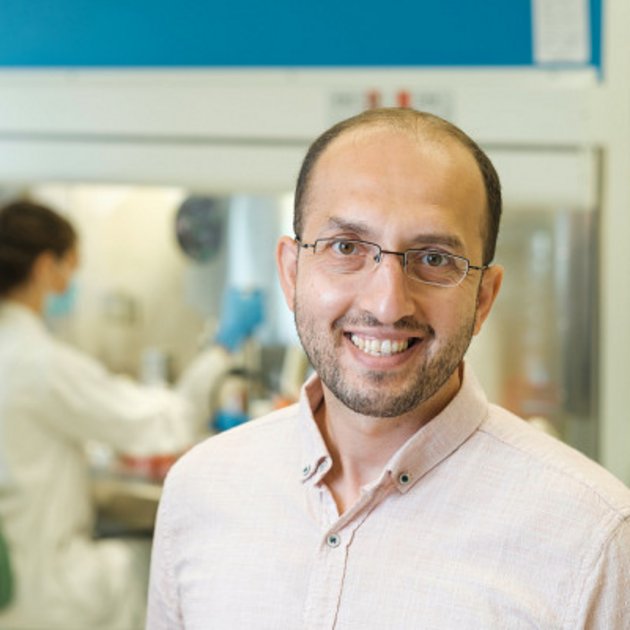
His research aims to discover new therapeutic targets that will improve cancer’s response to radiation. Professorresearcher Ayman Oweida is attempting to define the types of immune responses triggered by radiotherapy in patients with lung, head or neck cancer. Using advanced image-guided radiotherapy and other unique approaches, he and his team are investigating new immunotherapies that can be combined with radiotherapy to improve patient treatment.
A smart bra to detect and monitor breast cancer
Elijah Van Houten, PEng, PhD, professor-researcher at IRCUS
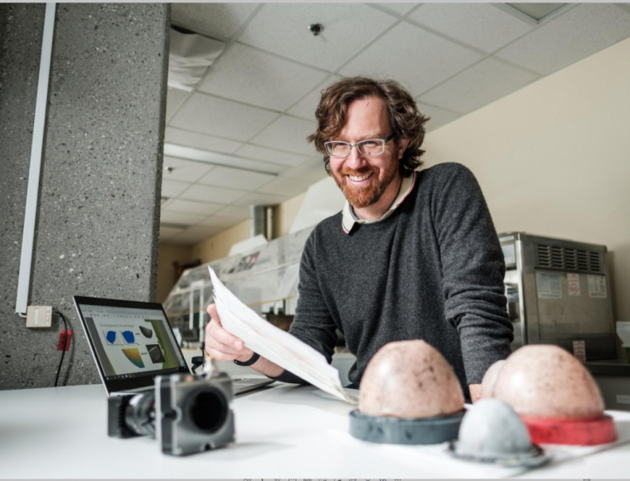
His research aims to develop a smart bra that facilitates the detection and monitoring of breast cancer. This new portable technology would allow real-time tracking of the evolution of cancerous masses: a major breakthrough in the field. About twenty years of research, prototyping, and experimentation were necessary before professor-researcher Elijah Van Houten arrived at the current result. Remote monitoring would make life much easier for people living in remote communities or those requiring more regular follow-ups.
- Learn more about his project (in French)
Innovative approaches against brain cancer: A cell “magnet”!
David Fortin, MD, professor-researcher at IRCUS
His research aims to develop new approaches against brain cancer. Dr. David Fortin has developed a new technology called GlioTrap that acts like a magnet attracting cancer cells to treat glioblastoma multiforme. After surgery to remove a primary tumour, researchers introduce into the cavity a gel loaded with molecules that have the property of attracting cancer cells. The gel then releases doses of slow-acting chemotherapy and radiotherapy treatments designed to kill the cells.
- Learn more about his project (in French)
Taking part in the fight against cancer means choosing to change the future!
Donating to the Université de Sherbrooke Cancer Research Institute (IRCUS) is more than just money. Your gesture helps support innovative multidisciplinary research that helps reduce the impact of cancer on those affected.