Feature | IRC Innovations for a Sustainable Planet
Nauman Shafiq Qureshi: From Mechanical Engineering to Environmental Life Cycle Assessment
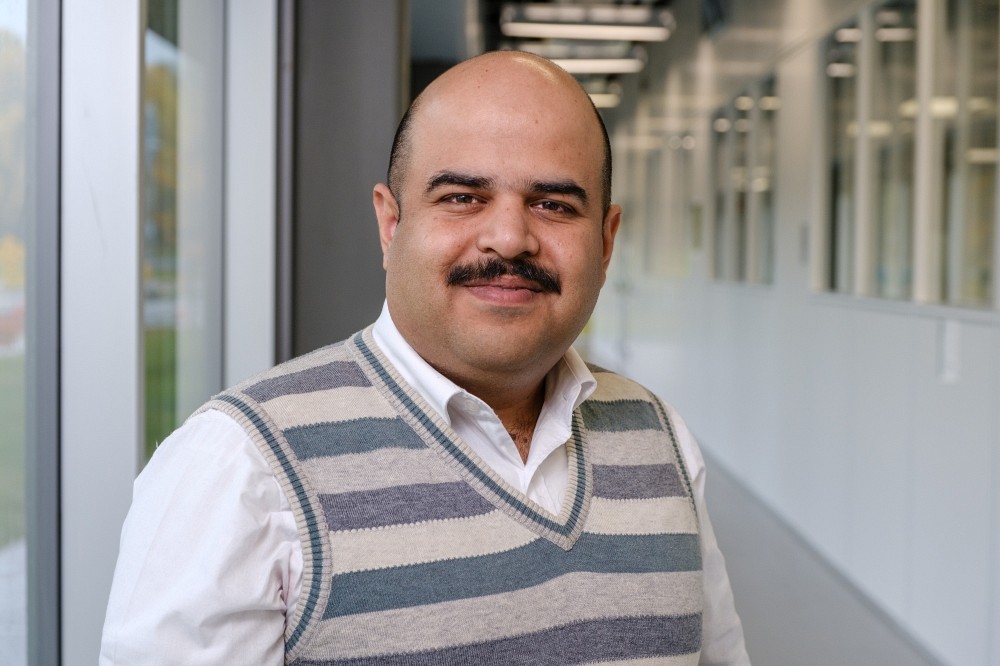
Photo : Courtesy
For Nauman Shafiq Qureshi, engineering has never been a fixed destination. His path has taken him from mechanical engineering in Pakistan to industry, followed by industrial engineering in France, and now doctoral research at the Université de Sherbrooke. Along the way, a longstanding fascination with machines has evolved into a broader question: how can engineering contribute to industrial development while addressing its environmental challenges?
At the Université de Sherbrooke, Nauman Shafiq Qureshi is pursuing his PhD under the supervision of Professor Marie-Luc Arpin, from the École de gestion, as part of a joint doctoral research project funded by the CNRS-UdeS International Research Center (IRC) “Innovations for a Sustainable Planet.” Professor Marie-Luc Arpin is also a researcher affiliated with the CNRS International Research Laboratory (IRL) Nanotechnologies Nanosystèmes (LN2), located within the innovation ecosystem of the Université de Sherbrooke’s Interdisciplinary Institute for Technological Innovation (3IT).
Today, Nauman Shafiq Qureshi’s research focuses on lithium-ion batteries and brings together life cycle assessment, supply chain’s risks and their mitigation, resource criticality and environmental considerations. His work is part of a wider research project in which teams in Québec and France combine technological research on battery materials with an assessment of their environmental, economic and supply-chain implications.
It is a multidisciplinary environment particularly well suited to a researcher who describes his own academic and professional trajectory as a continuing process of evolution.
From machines to sustainable engineering
Growing up in Pakistan, Nauman Shafiq Qureshi was fascinated by machines. Engineering seemed like a natural direction.
During my childhood studies, I always wanted to be an engineer because I always like to work with the machines. The machines used to fascinate me a lot when I was a child.
Nauman Shafiq Qureshi
He began a bachelor’s degree in mechanical engineering around 2011 and completed it in 2015. His interest in science, however, extended beyond what he encountered in the classroom. As a child, receiving an explanation often led him to another question: why does something happen, what causes it, and what is the logic behind it? What he particularly wanted was greater access to experimentation and laboratory work.
After completing his degree, he chose not to move immediately into graduate studies. Although a master’s degree and eventually a PhD were already part of his plans, he wanted industrial experience first. He therefore spent approximately six years working in the cement industry in Pakistan, where his main role involved resource planning.
That experience also revealed the distance that can sometimes separate academic training from industrial practice. Looking back on his undergraduate education, Nauman Shafiq Qureshi describes strong theoretical training but limited exposure to industry. Entering the workplace therefore required a period of adjustment as he learned how an industrial environment operates and how different levels of an organization interact.
Around 2023, a new chapter began when he moved to France to pursue a master’s degree in sustainable industrial engineering at Grenoble INP. The move broadened his understanding of what engineering could encompass. He encountered sustainability and the circular economy, fields that offered a way to consider industrial development alongside its environmental consequences.
This perspective is increasingly important: industries and technologies must continue to grow and evolve while keeping environmental challenges in check to prevent significant deterioration in the future.
Nauman Shafiq Qureshi
During his master’s degree, projects with Schneider Electric and the G-SCOP research laboratory gave him experience with life cycle assessment and circular economy approaches. He was particularly struck by the close connections he observed between French universities and industry, including research collaborations involving students. These experiences strengthened his curiosity about environmental assessment and helped define the direction he wanted to pursue at the doctoral level.
My whole journey was a kind of evolution in terms of different domains of engineering.
Nauman Shafiq Qureshi
That evolution led him from mechanical engineering to industrial engineering, and ultimately toward environmental assessment and circularity. By the time he began searching for doctoral opportunities, he knew he wanted to continue working with life cycle assessment, environmental engineering and the circular economy. He eventually found that opportunity in Sherbrooke.
Rethinking the materials inside tomorrow’s batteries
At the Université de Sherbrooke, Nauman Shafiq Qureshi is now turning his attention to lithium-ion batteries and to a challenge at the intersection of energy, materials and sustainability.
His doctoral research is part of ECO-LIB, short for Ecodesign of Binders and Recycled Materials for Li-ion Batteries. The joint project aims to develop more sustainable and efficient lithium-ion batteries using recycled materials and industrial by-products. It explores silicon recovered from end-of-life photovoltaic panels, germanium from microelectronics waste, and lignin sulfonate binders derived from the pulp and paper industry.
The approach is rooted in the circular economy: materials recovered from one industrial sector become potential resources for another. But demonstrating that recycled materials can function in a battery is only part of the question. ECO-LIB also evaluates the environmental and economic performance of the proposed battery and considers resource criticality, geopolitical factors and water availability in France and Québec.
For Nauman Shafiq Qureshi, one of the project's strengths is precisely that the technological and environmental questions are not addressed independently:
These two projects are not isolated, they are linked to each other. [...] We will study all of the dimensions. From electrochemistry to environmental impacts to the supply chain studies.
Nauman Shafiq Qureshi
His own contribution focuses on life cycle assessment and supply chains. The research will identify the supply chains for silicon, germanium and battery binders, compare conventional and alternative pathways in France and Québec, and assess their environmental and economic performance and criticality. The work also considers local water availability and examines how technical and environmental information is interpreted and used by academic and local actors.
ECO-LIB: Two PhD projects, one common research question
How can lithium-ion batteries incorporate recycled materials and industrial by-products while remaining technically effective and reducing environmental impacts and supply-chain vulnerabilities?
ECO-LIB brings together two complementary PhD projects and research teams in Québec and France. The project is led by Laure Monconduit of the Institut Charles Gerhardt Montpellier (ICGM) and Guillaume Junqua of IMT Mines Alès on the CNRS-France side, and by Abderraouf Boucherif and Marie-Luc Arpin at the Université de Sherbrooke, in Québec.
Noé Bouilhaguet: From recycled materials to battery performance
Supervised by Laure Monconduit and Abderraouf Boucherif, Noé Bouilhaguet’s doctoral research focuses on the technological proof of concept. The research characterizes recycled silicon and germanium, as well as lignin sulfonate binders, before using these materials to formulate electrodes and produce corresponding batteries. Their electrochemical performance is then evaluated and compared with conventional approaches.
The Université de Sherbrooke team is responsible for collecting and characterizing recycled materials, including silicon from photovoltaic panels and materials from microelectronics waste. Some of the silicon and silicon-germanium active materials will also be made porous to study how this structuring affects electrochemical performance. The ICGM team will manufacture anodes using materials and polymers supplied by the Université de Sherbrooke and study their electrochemical and structural behaviour during lithium-ion battery charge and discharge cycles.
Nauman Shafiq Qureshi: Environmental performance, life cycle and supply-chain criticality
The second doctoral project, conducted by Nauman Shafiq Qureshi under the supervision of Marie-Luc Arpin and Guillaume Junqua, complements the technological research with life cycle and supply-chain analysis. It will develop a life cycle assessment methodology for comparing the environmental and economic performance of the proposed battery with conventional batteries in France and Québec while integrating resource criticality, geopolitical considerations and water availability.
The research connects four industrial sectors: microelectronics, photovoltaics, the forest industry and lithium-ion batteries. It will map conventional and alternative supply chains, assess their environmental performance and criticality, and examine how the resulting technical, environmental and criticality data are appropriated by academic and local actors.
One project, complementary perspectives
Together, the two doctoral projects connect technological feasibility with socio-environmental assessment. The first provides a proof of concept for lithium-ion batteries incorporating recycled materials and alternative binders. The second assesses the socio-environmental implications of the recycling and ecodesign pathways being proposed. This complementarity allows ECO-LIB to examine battery development through electrochemistry, life cycle assessment, resource criticality and water management rather than treating these dimensions separately.
From solar panels to batteries
One example makes this circular approach particularly tangible: silicon recovered from end-of-life photovoltaic panels.
The silicon which we extract from photovoltaic panel, we can use them in the lithium-ion batteries.
Nauman Shafiq Qureshi
In ECO-LIB, silicon recovered from photovoltaic panels is considered for the anode, while germanium from microelectronics waste and lignin sulfonate from pulp and paper industry by-products provide other potential inputs. Recycled silicon could avoid some purification and associated water-consumption requirements while reducing dependence on foreign sources of supply. Germanium, meanwhile, is considered a critical and strategic material because its production is concentrated in relatively few countries.
The subject connects with questions Nauman Shafiq Qureshi first encountered much earlier in his career. While working in Pakistan, he witnessed energy shortages and saw companies, including the one where he worked, transition toward solar electricity. Energy storage became a natural extension of those questions: renewable sources such as solar power can generate electricity at certain times, but batteries make it possible to store energy for later use.
His doctoral research is also pushing him beyond familiar disciplinary boundaries. Assessing supply-chain vulnerability, for example, requires him to engage with geopolitics as well as engineering.
Some of the dimensions are really new for me. For example, how geopolitics can influence the policies which ultimately put stress on the supply chain of critical materials? Because when we study the supply chain, we have to understand geopolitics.
Nauman Shafiq Qureshi
In his view, sustainability itself demands this broader perspective. Environmental questions intersect with economic and societal considerations. His doctoral project therefore gives him an opportunity to combine his engineering background and experience in life cycle assessment with new expertise in critical materials, supply chains, and social sciences.
A new research environment and a new life in Sherbrooke
Coming to Sherbrooke represents the latest stage in an international journey that has taken Nauman Shafiq Qureshi from Pakistan to France and now Canada. When interviewed, he had only been in Sherbrooke for a little over a month, so he was careful to describe his impressions as preliminary.
One immediate difference was the campus environment. Having studied at Grenoble INP, whose schools he describes as being distributed around Grenoble, he found a different experience at the Université de Sherbrooke.
When I came to University of Sherbrooke, [...] my first impression is that it is very nice, because you get a university campus feeling.
Nauman Shafiq Qureshi
He also speaks positively about the university environment and the laboratories he has encountered. Despite the scale of an international move, one element of Québec life was already somewhat familiar to him: French. Moving from Pakistan to France had been a much greater linguistic transition, since he had previously studied English but not French. Immersion in France encouraged him to learn the language. He now uses French in everyday situations, although he prefers English for conversations requiring greater precision.
The move to Sherbrooke was also a family transition. His wife, who had accompanied him during his years in France, moved to Canada with him, and their daughter was born in France shortly before their departure. Travelling and establishing a new home with a newborn added another dimension to the experience. He particularly remembers the support he received from people at the Université de Sherbrooke, including assistance from his supervisor while trying to secure an apartment from abroad.
Professionally, he sees a particularly good fit between his own trajectory and the multidisciplinary character of the IRC:
My profile comes from different dimensions, and I can feel that I am at the right place.
Nauman Shafiq Qureshi
Outside research, Nauman Shafiq Qureshi follows current affairs and enjoys watching football, an interest that grew stronger during his years in France. He also enjoys playing tennis. Ice hockey, meanwhile, remains something to discover as part of his Canadian experience.
His longer-term professional ambitions remain closely connected to another recurring theme in his journey: bringing research and industry together. His immediate objective is to complete his PhD and make the most of the research opportunity. Beyond the doctorate, he sees himself pursuing research in an industrial setting.
Further ahead, he imagines assuming greater responsibilities in research projects and eventually moving toward management. As for where that career might unfold, Nauman Shafiq Qureshi remains open. Having already experienced different cultures and working environments, he places considerable importance on the culture in which research and innovation take place.
That openness mirrors his scientific trajectory. Mechanical engineering led to industry; industry led to sustainable industrial engineering; sustainability led to life cycle assessment and the circular economy; and those interests have now led to batteries, critical materials and supply chains. Rather than leaving one discipline behind each time, Nauman Shafiq Qureshi has progressively added new dimensions to the questions he wants to answer.
For a researcher who describes his own journey as a story of evolution, Sherbrooke is therefore less an endpoint than the beginning of another chapter.
Additional Information
Laboratoire Nanotechnologies Nanosystèmes (LN2) IRL CNRS
Institut Charles Gerhardt Montpelier
Interdisciplinary Institute for Technological Innovation (3IT) UdeS