CNRS IRCs
What is an International Research Center (IRC)?
The CNRS International Research Center (IRC) is a cooperation mechanism set up by the CNRS to strengthen its strategic partnerships with its main international collaborators.
In 2021, the CNRS devised a new way of cooperating with some of its main international partners through its International Research Centers (IRCs). These strategic partnerships are based on a clear ambition: to pool the resources and expertise of the CNRS and its partners in order to consolidate existing collaborations between the two institutions, while paving the way for new interdisciplinary and transdisciplinary projects that have been jointly identified.
Each IRC is the result of a joint effort in which the CNRS and its partners define thematic areas of research together, based on existing collaborations between their scientists and the broad strategic orientations of each institution. Regular meetings provide a forum for dialogue between the CNRS and partner pilot teams, enabling them to align their objectives and respond to the scientific challenges of today and tomorrow.
IRCs enable research teams from both institutions to benefit from shared academic, administrative, and infrastructure resources, paving the way for ambitious cooperation projects and expanded funding opportunities. Supported by targeted assistance programs, they create an environment conducive to collaborative research, student and researcher mobility, and the strengthening of international cooperation networks.
See the IRC page on the CNRS website
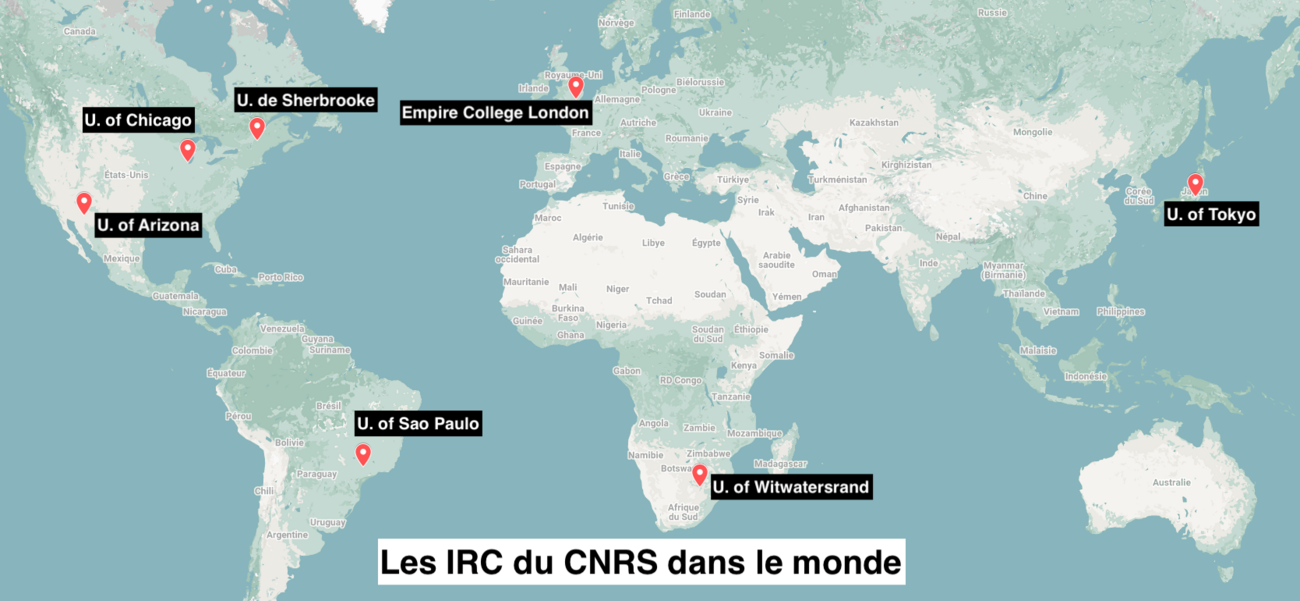
Around the World