Feature | IRC Innovations for a Sustainable Planet
Marc-Olivier Gosselin: A Story of Curiosity Leading to the Chemistry of Aluminum-Air Batteries
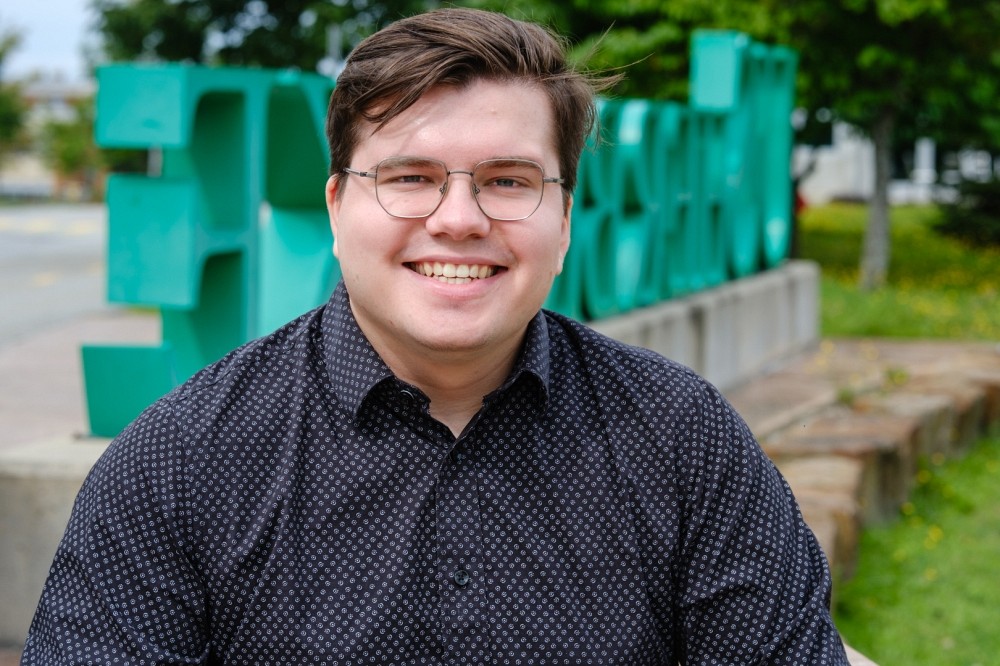
Photo : Courtesy
At the intersection of materials chemistry, the energy transition, and fundamental research, Marc-Olivier Gosselin is dedicating his doctoral work to a challenge that is as concrete as it is complex: gaining a better understanding of aluminum alloys that could serve as the basis for new aluminum-air batteries. Under the supervision of Prof. Allison Wustrow, and in collaboration with several colleagues, he is investigating the stability of these materials, their surface reactivity, and the electrochemical mechanisms that determine their performance.
His work takes place against a backdrop where the electrification of vehicles is emerging as one of the key drivers of decarbonization in transportation. However, this transition is placing increasing pressure on the supply chains for strategic materials needed for batteries, particularly lithium, nickel, cobalt, graphite, and copper.
In this context, the search for more diversified, sustainable, and geographically adaptable storage technologies is becoming a major scientific, industrial, and geopolitical challenge. Aluminum-air batteries offer a promising avenue in this regard: they rely on an abundant, recyclable metal that is already deeply rooted in Quebec’s industrial fabric, while raising new fundamental questions about the design of higher-performing and more sustainable materials.
Educational Background and Student Projects
As the son and grandson of builders, he first developed his understanding of the world through hands-on experience, assisting his father on various construction projects and relentlessly asking him questions about the materials they were working with. This initial curiosity, focused on the intrinsic composition of objects—wood, glue, melamine—gradually steered his inquiries toward chemistry.
Having attended CEGEP during the COVID-19 pandemic, he retains a strong interest in the sciences, with a budding preference for chemistry—a discipline that allowed him to contextualize a molecule within a material and to explore his questions about the structure of matter.
His decision to pursue his bachelor’s degree at the University of Sherbrooke was based on two criteria: affordability and, above all, the availability of the cooperative education program, which offered the opportunity to gain hands-on research experience during his studies. Co-op internships and participation in seminars offered by the chemistry department—which were open to undergraduate students—allowed him to identify his areas of interest. Inorganic chemistry, particularly the chemistry of materials that he discovered throughout his studies, offered him a field of fundamental research that remained largely unexplored.
In inorganic chemistry, three-quarters of what we understand boils down to this: we take a metal, mix it with another metal, heat them for a long time, and then see what happens. And it doesn’t go any deeper than that. There are different synthesis methods, but three-quarters of them boil down to “we’ll heat it to very high temperatures and then hope it works.”
Marc-Olivier Gosselin
This realization led him to pursue a master’s degree under the supervision of Professor Allison Wustrow, focusing on the study of heteroanionic substitutions in lithium battery cathode materials. This project focused on understanding how replacing some of the oxygen atoms with fluorine in the cathode structure affects the material’s stability and electrochemical performance. Given the strong connection between this work and an emerging doctoral topic on aluminum-air batteries, he was granted fast-track admission to the Ph.D. program.
Ongoing Research, Partnerships, and Collaborations
Marc-Olivier Gosselin’s doctoral project is part of a major Franco-Canadian partnership titled “Evaluating Aluminum Energy: Performance and Circularity, from Electrons to the Aluminum-Air Battery (EvAlNR).” This project brings together two complementary dissertations: one in France under the supervision of Professor Philippe Mandin (University of Southern Brittany, IRDL UMR CNRS 6027) and his colleague Laurent Guillet (Lab-STICC UMR CNRS 6285), and the other at the University of Sherbrooke under the supervision of Professor Allison Wustrow (Department of Chemistry, Quantum Institute).
The technological context underlying this research is well defined. Lithium-ion batteries, the gold standard for electrochemical energy storage, achieve energy densities of around 150 Wh/kg and 300 Wh/L, but rely on a metal that is scarce and concentrated in only a few regions of the world, raising significant ethical and geopolitical concerns—particularly regarding cobalt mining in the Democratic Republic of the Congo. Hydrogen, for its part, requires rare platinum group metals and complex high-pressure storage tanks. Aluminum, on the other hand, has the advantage of being the most abundant metal in the Earth’s crust (about 8%), with a mature and well-established industrial sector in Quebec. Depending on the alloys used, Al-air batteries could potentially deliver up to 4 kWh/kg and 11 kWh/L, with an efficiency approaching 50% for the highest-performing prototypes.
As Marc-Olivier Gosselin explains, an aluminum-air battery consists of a metallic aluminum anode, a grid-type cathode exposed to air, and an alkaline aqueous electrolyte (typically a NaOH solution). Unlike lithium, which reacts violently with water, air, and many contaminants, metallic aluminum is stable in the environment, making it possible to avoid the flammable and toxic organic solvents used in Li-ion batteries. The Al-air battery is, however, a primary cell: the anode is consumed during discharge and must be physically replaced; the aluminum hydroxide produced can be reprocessed using existing industrial processes (the Bayer process, the Hall-Héroult process) to close the cycle.
Marc-Olivier Gosselin’s specific project focuses on the fundamental understanding of the anode. Currently, only commercially available alloys are used, which prevents any systematic study of the effect of dopants and optimal concentrations. Two main problems limit performance: first, the formation of a passivation layer (“barrier”) on the anode surface, which reduces the utilization rate to approximately 80–85%, and second, a side reaction involving hydrogen production (Hydrogen Evolution Reaction, HER) that competes with the desired oxygen reduction reaction (Oxygen Reduction Reaction, ORR). However, the reaction with oxygen offers an energy yield approximately 1.8 times greater than that produced by hydrogen alone.
The methodological approach combines two components. The first is based on computational screening using quantum chemistry, drawing on density functional theory (DFT)—an area of expertise developed by Professor Wustrow at the Quantum Institute. The goal is to evaluate the thermodynamic stability of various alloys, their formation energies relative to their constituent elements and competing phases, the open-circuit potential on different crystallographic faces, as well as the bond energies of reaction intermediates along the ORR and HER pathways. The second phase involves the experimental synthesis of the selected candidates, taking advantage of aluminum’s relatively low melting point (660 °C), which allows for the formation of alloys in the molten state, supplemented by quenching or electrosynthesis methods for metastable phases. Galvanostatic discharge and polarization tests are then used to validate the computational predictions.
Particular attention is paid to elements already present in bauxite processed in Quebec, as well as to the economic and environmental viability of the alloying elements, in close collaboration with Professor Désilets’s team, which contributes its expertise in primary aluminum production and in the analysis of impurities introduced into spent electrolyte.
Research Experience in Sherbrooke and Future Prospects
The research environment offered by the University of Sherbrooke has played a decisive role in Marc-Olivier Gosselin’s career path.
The great thing is that all the seminars are open to the public—including all graduate students and undergraduates. So, while you’re working on your bachelor’s degree, you can attend the seminars, see what people are working on, and learn about their projects.
Marc-Olivier Gosselin
The transition from the master’s to the doctoral program reflects a thematic continuity—from heteroanionic substitution in lithium cathodes to a fundamental understanding of aluminum anode alloys—and a natural progression toward broader applied challenges.
The program also includes joint supervision periods between Sherbrooke and Lorient, allowing him to benefit from shared guidance and access to the IRDL’s experimental facilities for evaluating battery performance and aging mechanisms—which complement the synthesis and characterization resources available at the UdeS.
Marc-Olivier Gosselin also shows a notable interest in science communication.
I generally enjoy explaining things. When you’re at a conference and there are professors there, they sometimes bring their children with them. At one of the talks I gave this summer, one of the professors I’d had last year brought his 7- and 10-year-old children, and he wanted me to explain my project to them. So I tried to explain it in very simple terms so they could at least get an idea of what I’m working on.
Marc-Olivier Gosselin
In the summer of 2026, he won third prize for best scientific poster at the 10th Annual Conference on Functional Materials Research, held at the University of Sherbrooke. This event was an excellent opportunity to present the results of his master’s thesis on the use of molybdenum oxyfluoride as a cathode material for batteries.
Beyond its scientific contribution to understanding anode mechanisms, Marc-Olivier’s work is part of a broader effort to develop energy storage technology that is less dependent on critical resources, better aligned with environmental sustainability goals, and compatible with Quebec’s aluminum industry. The prospect of establishing collaborative projects between teams on both sides of the Atlantic points to a lasting presence for this research in the international landscape of electrochemical energy storage.