Funding for six joint CNRS-UdeS doctoral theses | IRC Innovations for a Sustainable Planet
Acknowledging excellence in interdisciplinary projects in science, engineering, and management.
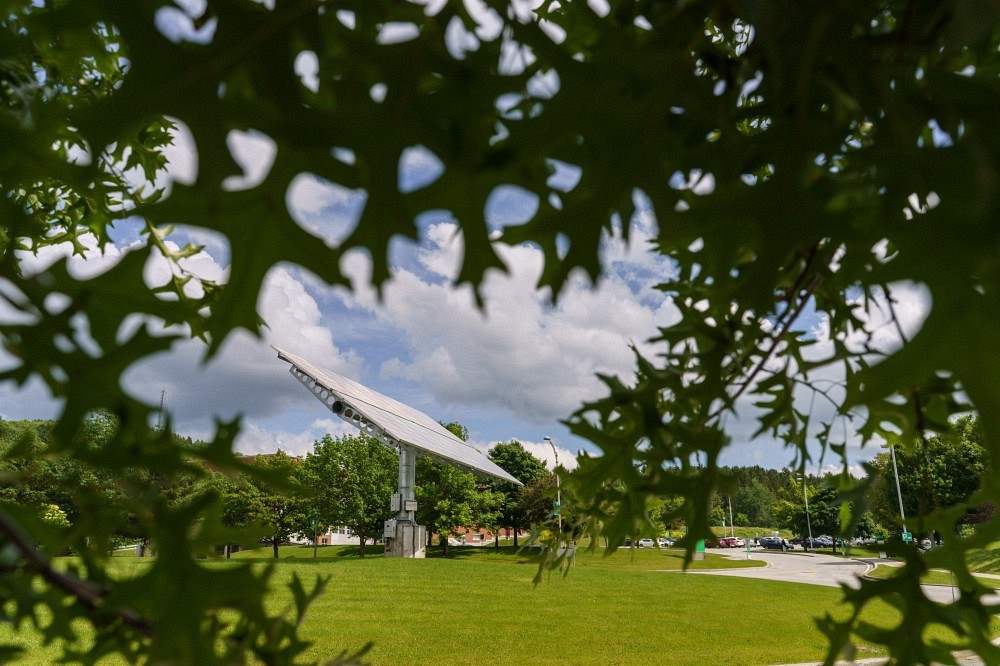
Photo : Michel Caron - UdeS
The CNRS-UdeS International Research Center (IRC) “Innovations for a Sustainable Planet” announces the awarding of funding to three joint doctoral thesis pairs as part of its 2025 call for projects. This initiative illustrates the commitment of the IRC, the sixth center of its kind in the world and the first in Canada, to innovative and interdisciplinary solutions to contemporary environmental challenges.
The IRC's 2025 call for projects aimed to support collaborative research between UdeS and CNRS in the areas of micronanotechnologies and sustainable chemistry – low-carbon materials. Each funded project includes a team of four researchers, made up of UdeS-CNRS pairs. One pair will supervise a doctoral thesis affiliated with the UdeS, while the second pair will supervise a doctoral thesis affiliated with the CNRS.
This approach integrates interdisciplinarity at the heart of the projects, making it possible to address issues and challenges that also relate to the IRC's other areas of focus: Responsible Innovation, Transitions, and Biodiversity; and Quantum Science and Technology.
Aluminum-air batteries for carbon-free mobility
This project, led by Prof. Philippe Mandin (Mechanical Systems Laboratory IRDL UMR CNRS 6027), Prof. Martin Desilets (Faculty of Engineering, UdeS), Prof. Allison Wustrow (Faculty of Science, UdeS), and Senior Lecturer Laurent Guillet (Laboratory of Information, Communication, and Knowledge Sciences and Technologies, UMR CNRS 6285), explores the potential of aluminum-air batteries as alternatives to lithium-ion batteries. This promising technology could offer higher energy densities (up to 4 kWh/kg) while relying on aluminum, an abundant metal that accounts for about 8% of the Earth's crust. The two theses examine the electrocatalytic performance of different aluminum alloys using digital quantum mechanics, while analyzing the material's cyclability and societal acceptability.
Eco-design of lithium-ion batteries using recycled materials
This project, led by Research Director Laure Monconduit (Charles Gerhardt Institute, Montpellier, UMR CNRS 5253), Prof. Abderraouf Boucherif (Faculty of Engineering, UdeS),Prof. Marie-Luc Arpin (School of Management, UdeS), and research professor Guillaume Junqua (Hydrosciences Montpellier UMR CNRS 5151, IMT Mines Alès), is developing lithium-ion batteries that incorporate recycled materials from various industries. The initiative uses silicon from end-of-life photovoltaic panels, germanium from microelectronic waste, and bio-based binders derived from the paper industry. This circular economy approach complies with new European regulations limiting the use of fluorinated polymers in batteries.
Bio-based additives for sustainable building materials
This project, led by Prof. Jean-Baptiste d'Espinose de Lacaillerie (UMR CNRS 7615, SIMM ESPCI), Prof. Jérôme Claverie (Faculty of Sciences, UdeS), and Prof. Arezki Tagnit-Hamou (Faculty of Engineering, UdeS), is developing bio-based cationic dispersants for the construction of sustainable infrastructure. Using dimethylsulfopropionate (DMSP), the most abundant organic sulfur compound on Earth, the project aims to replace up to 50% of Portland cement with calcined clays such as metakaolin. This innovation could significantly reduce greenhouse gas emissions from the construction sector, which accounts for 7% of global emissions.
A France-Quebec collaboration of excellence
These projects illustrate the complementary nature of the expertise between the French and Quebec teams. The IRC benefits from the UdeS's unique collaborative research ecosystem and the scientific excellence of the CNRS to develop disruptive technologies. Each thesis duo involves regular exchanges between the teams, with research stays on both sides of the Atlantic, enriching the training of doctoral students while strengthening long-term research ties.
This initiative reaffirms the IRC's position as a major player in international collaborative research for a sustainable planet. The IRC thus joins the CNRS network of international research centers, which also includes centers in the United States, the United Kingdom, Japan, Brazil, and South Africa, demonstrating the CNRS's commitment to international scientific cooperation to address global challenges.